

 العربية
 اردو
 中文
How can e-invoicing help your finance team?
· 5 min
From reducing repeated data entry to easier search and review: practical benefits to consider when preparing for Fawtara.
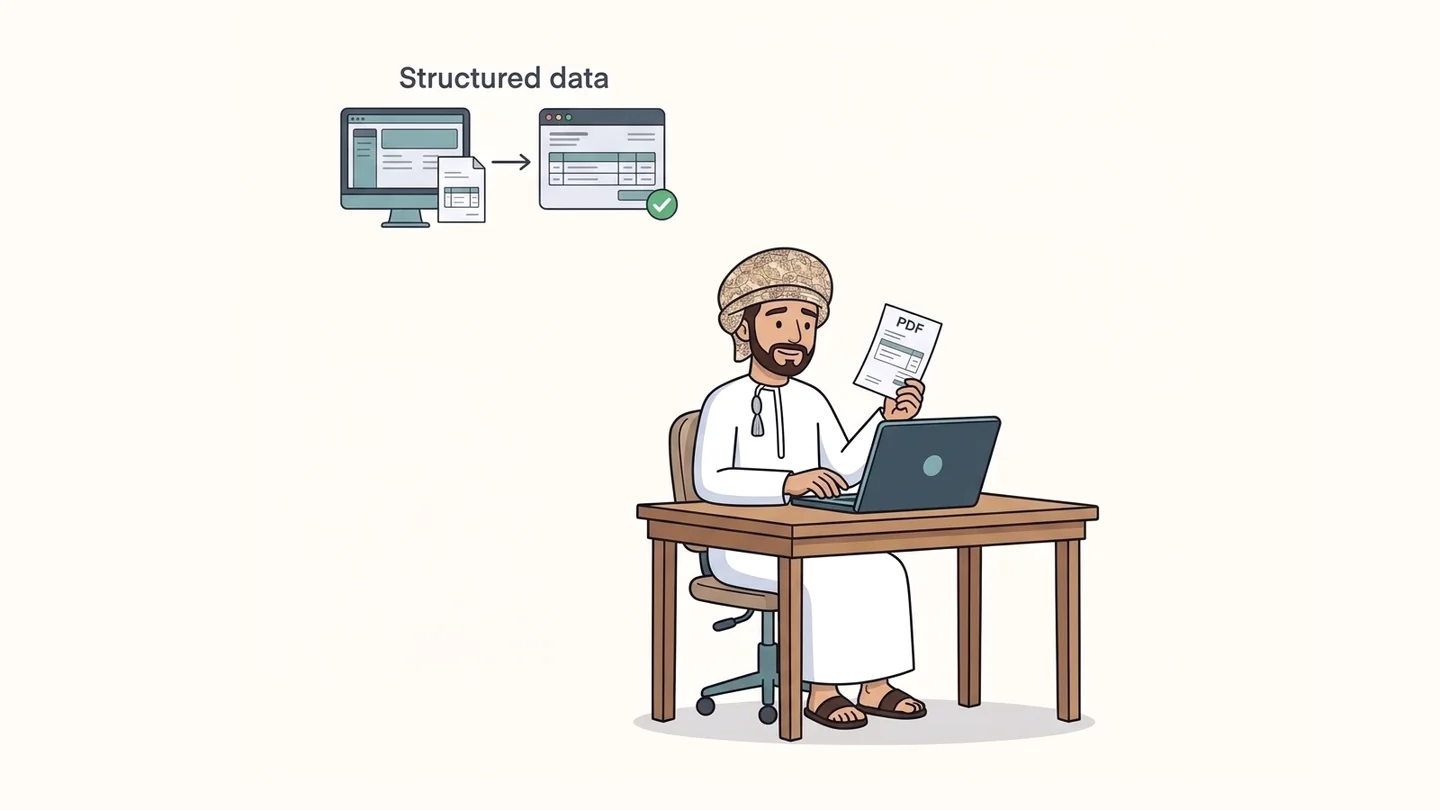
Preparing for Fawtara is an opportunity to review your invoice lifecycle, from data entry to receipt, review and storage. The benefits depend on suitable integration, accurate data and staff who understand the process.
Less repeated entry
Moving information between systems in structured fields can reduce repeated invoice-data entry. The level of automation depends on integration, configuration and your workflow.
Earlier problem detection
Validation rules help identify specified errors and missing information before processing is completed. They do not replace correct tax treatment or commercial review; those responsibilities remain with the business.
Easier search and review
A properly configured electronic archive makes records easier to find and corrections easier to trace. Agree on storage, retrieval and export. Do not assume Peppol stores documents for you.
What about the customer-readable copy?
A readable copy can continue to support customer communication alongside the required structured data, exchange and reporting, combining clear presentation with electronic processing.
What does your team need?
- Complete customer and supplier information in the correct fields.
- Correct tax treatment for each line.
- Clear responsibility for rejections and corrections.
- Training on issuance, receipt and record access.
Is preparation limited to sales invoices?
Review supplier invoices too. For imports, discuss relevant self-billing and reporting requirements rather than assuming they are outside the project.
Start by reviewing invoice data and request a demonstration using your samples. Read about the invoice lifecycle, or book a free Dhara assessment.